
Key Points
CrossFit can be a safe and effective workout for women over 40 if it is adapted to their fitness level.
Understanding the basics and fundamentals of CrossFit is crucial for a successful fitness journey.
Preventing injuries is possible by creating a safe workout environment and focusing on form.
Consistency, proper nutrition, and recovery are key elements of CrossFit training for women over 40.
A supportive community can greatly enhance motivation and progress.
Entering the Box: Starting a Health Journey After 40
So you’re over 40 and ready to enter the world of CrossFit? That’s great! Remember, age is just a number, and it’s never too late to start a journey towards a healthier you. CrossFit is a great way to push yourself, build strength, and improve your overall fitness. But let’s be honest—starting any new fitness routine, especially one as dynamic as CrossFit, requires some knowledge to ensure you’re safe and getting the most out of your workouts.
Unlocking Your Power with CrossFit

CrossFit revolves around high-intensity functional movements that resemble everyday actions. It’s aimed to enhance your cardiovascular health, strength, stamina, agility, balance, among other things. The best part? It’s infinitely scalable, implying that every workout can be adjusted to match your current fitness level and abilities. So, whether you’re lifting a barbell for the first time or you’re an experienced athlete, CrossFit has something for you.
Making Training Sustainable
The most important aspect of CrossFit for women over 40 is sustainability and longevity. The aim is to create a fitness routine that you can keep up for many years. This involves listening to your body, making sensible changes, and respecting your individual needs. It’s not about competing with the person next to you; it’s about your own progress and health.
Laying Down the Basics
Before you jump head first into the pool, it’s important to ensure you’ve got a strong base to work from. This is key for both your safety and your progress. It can be tempting to go all in straight away, but believe me, it’s better to start slow and steady – it’ll be worth it in the end. For more guidance on building that strong base, check out these explosive plyo box workouts for power which can be a great addition to your CrossFit routine.
Getting to Know the Basics of CrossFit
Before anything else, you need to understand the standard movements in CrossFit. These are squats, deadlifts, presses, and others. Each of these movements is designed to target several muscle groups, which is why they are so effective. However, they need to be done correctly to avoid injury.
Here’s an easy way to get started:
Squats: Start with air squats, making sure to get low and maintain good form.
Presses: Begin with light weights to perfect your form for overhead and bench presses.
Deadlifts: Use a PVC pipe or an empty barbell to practice the correct form before adding any weight.
Also, don’t forget that YouTube and the official CrossFit website have a ton of helpful tutorials and demos. Just make sure you’re watching content from reliable sources.
Setting Up a Safe Exercise Environment
Whether you’re exercising at home or in a fitness center, the space you’re in is important. Ensure you have plenty of room to move around without any obstacles that could cause you to trip. If you’re at a fitness center, don’t be shy about asking the staff for a walkthrough and a rundown of the equipment. Safety is the most important thing, and it all begins with a good setup.
Don’t forget these pointers:
Make sure that all equipment is in good working order and is stored correctly.
Have an open space that allows for free movement.
Have water and a towel close at hand to keep hydrated and to deal with perspiration.
By carefully setting up your space, you will not only ensure your safety but also make your workouts more efficient and enjoyable.
Mapping Your Journey: Establishing Attainable Goals
As we move forward on this path, it’s important to map your journey. Establishing goals provides you with guidance and inspiration. It’s akin to having a fitness journey GPS; you are aware of your destination and can rejoice in each achievement along the way.
Short-term Goals
First, set attainable short-term goals. These can be as simple as going to three CrossFit classes a week or learning a new movement every month. Short-term goals are your stepping stones to success, and they should be specific, measurable, and timely. For example:
Finish a full CrossFit session with altered exercises within the first 30 days.
Slowly increase the weight you lift by 5% each week.
Work on enhancing your flexibility with the aim to touch your toes within six weeks.
Long-term Goals
Long-term goals are your vision of the future. Where do you envision your fitness level in a year? How about in five years? These might include participating in a CrossFit competition, doing a certain number of unassisted pull-ups, or just maintaining a regular workout schedule. Remember, the goal is progress, not perfection. And with each long-term goal achieved, you set a new one, because growth is never-ending.
How to Avoid Injuries: Wise Training Techniques
Next, we’ll discuss how to avoid injuries. This is particularly crucial for women over the age of 40. Our bodies are evolving, and we must be aware of how we exercise to ensure we can continue to do so. Learn more about injury prevention secrets & techniques for a safer workout experience.
Keeping Your Form and Technique in Check
Good form isn’t just about looking the part when you’re lifting weights; it’s about looking after your body. A common mistake is to let your form slip so you can lift heavier weights or get your workout done quicker. But here’s the truth: good form equals better results and fewer injuries. So, slow down, focus on your technique, and the strength will come.
Here are a few tips:
Always remember to use your core in all movements to ensure your spine is protected.
When lifting weights, make sure your movements are controlled.
Use mirrors or even record your workouts to check your form.
If you’re ever in doubt, don’t hesitate to ask a coach or a more experienced CrossFitter for feedback. There’s no shame in wanting to learn; it’s the only way we improve.
Knowing When to Work Hard and When to Take a Break
It’s important to pay attention to what your body is telling you. Some days you will feel like you can do anything, and other days your body will be crying out for a break. Pay attention to these signals. Training too hard can lead to exhaustion and injury, which will set you back instead of helping you make progress. Rest days are just as important as the days you work out—they give your muscles a chance to recover and get stronger.
Life Outside the CrossFit Box: The Importance of Balance and Recovery
CrossFit is not only about the high-intensity workouts you perform in the box, but also about the efforts you make outside of it to take care of your health. Balance and recovery play a crucial role in keeping you fit and active in the long run.
How Food Affects Fitness Over 40
Your diet is the fuel for your exercise and recovery. As we get older, our metabolism and nutritional needs change. It’s important to eat a balanced diet with plenty of protein, healthy fats, and complex carbs. You can think of food as the building blocks for your body—the better the food, the stronger you’ll be.
Here are some easy-to-follow diet tips:
Include a wide range of colorful fruits and vegetables for a variety of nutrients.
Opt for lean proteins to aid in muscle repair and growth.
Keep hydrated all day, not just during your workouts.
Restorative Activities to Boost Recovery
Recovery isn’t just about taking a day off; it’s about actively assisting your body in healing. This could involve activities like yoga, meditation, or even a casual walk. These activities help lower stress, increase flexibility, and enhance mental clarity. Plus, they’re a fantastic way to add variety and keep your routine interesting. For more detailed guidance, explore our comprehensive guide on magnesium benefits for enhanced CrossFit recovery for women.
Think about these healing exercises:
Use yoga for increasing flexibility and reducing stress.
Practice deep breathing exercises to soothe the mind and body.
Get regular massages or use a foam roller to relieve tension.
The key is to discover what suits you best and incorporate it into your daily regimen.
Finding Your Fit Tribe: The Power of Community and Support
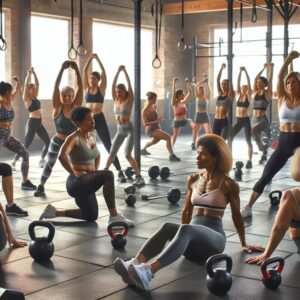
Lastly, we need to discuss the importance of community. CrossFit is famous for its strong sense of togetherness. Finding your tribe can be the key to staying motivated and responsible. These are the people who will be cheering for you when you reach a new personal record and will be there for you when you’re having a hard time.
Find a Workout Buddy for Encouragement
Working out with others who share your fitness goals can help you stay motivated. These people know what you’re going through because they’re on the same path. So don’t hesitate to make friends, sign up for a group class, or get involved in local events. The relationships you build will greatly enhance your CrossFit journey.
Here’s how to get in touch:
Enroll in a CrossFit group or class at your neighborhood fitness center.
Take part in community fitness sessions or philanthropic activities.
Connect with online discussion boards or social networking groups for advice and motivation.
Don’t forget, every CrossFit enthusiast started from scratch, and most will be thrilled to assist you on your journey. So, tie up those trainers, chalk up those palms, and prepare to embark on an amazing voyage of health and self-awareness. You can do it! For more guidance, check out these workout tips for women over 40.
Enhancing Mental Fortitude and Physical Power
Choosing to engage in CrossFit post-40 isn’t solely about improving your physical abilities; it’s just as much about boosting your mental toughness. Every workout you complete doesn’t just build muscle, it also builds resilience. The obstacles you conquer in the box lead to a more confident, stronger you in your daily life.
Approach each workout with a can-do attitude, reminding yourself of your potential.
Embrace the discomfort of challenging yourself—it’s the key to progress.
Use positive self-talk to overcome difficult moments; your mindset can be your biggest ally.
As you advance, you’ll discover a newfound resilience that helps you handle life’s challenges with confidence. It’s the kind of inner strength that develops from consistently showing yourself that you can conquer difficult tasks.
Don’t forget that every repetition, every set, and every bead of sweat is a testament to your mental strength. These are victories that you should celebrate, because they are molding you into a stronger, more resilient person.
When the going gets tough, remember the hurdles you’ve already overcome. This will remind you that you have the power to handle whatever comes your way.
Considering Your Personal Development in CrossFit
As you delve deeper into CrossFit, take a moment to look back on your progress. Recognize not only the physical transformations, but also the personal development you’ve undergone. With every hurdle you’ve overcome in the box, you’re growing, becoming a stronger version of yourself.
“I never realized my own strength until I took up CrossFit. It’s not just about lifting weights; it’s about breaking down my own personal barriers.”
These moments of reflection are so important. They let you see how far you’ve come and help you decide where you want to go next.
Whether you’ve just completed your first month or you’re marking a year of CrossFit, take a moment to reflect on where you started. You’re not there anymore. You’re stronger, smarter, and more capable than you ever thought possible.
Commonly Asked Questions
When you start CrossFit, it’s normal to have a lot of questions. Here are some of the most frequently asked questions to help you navigate your new fitness routine.
What Changes Should CrossFit Newbies Over 40 Make?
For newbies over 40, the trick is to begin with changes that let you safely develop strength and stamina. Concentrate on perfecting your form before you ramp up intensity or weight. Collaborate with a trainer to modify workouts that might include:
Opt for lighter weights or bodyweight movements as opposed to heavy lifting.
Reduce the number of reps or rounds to manage fatigue.
Swap high-impact exercises like box jumps for low-impact alternatives such as step-ups.
What is the Ideal Frequency for Women Over 40 to Do CrossFit?

Consistency is key, but so is balance. Aim for 3 to 4 CrossFit workouts per week, allowing for rest days in between. This schedule provides ample time for recovery while maintaining a regular exercise routine. Listen to your body and adjust as needed—some weeks you may need an extra rest day, and that’s perfectly okay.
Does CrossFit Help Manage Menopausal Symptoms?
Yes, CrossFit can help manage menopausal symptoms. Regular exercise can help reduce hot flashes, improve mood, and counteract the loss of bone density associated with menopause. Additionally, the supportive community aspect of CrossFit can provide a sense of camaraderie during this transition.
That being said, every woman goes through menopause differently, so it’s crucial to speak with a healthcare professional to customize your workout plan to your unique needs.

If you’re worried about joint pain, concentrate on low-impact exercises.
Include weight-bearing exercises in your routine to help preserve bone density.
Stay hydrated and wear layers to help control body temperature changes.
What you eat is crucial in supporting your CrossFit training, particularly after you turn 40. Here are some ways you can change your diet to help you perform better and recover faster:

What Dietary Changes Can Help With CrossFit Training After 40?
Boost your protein consumption to help your muscles repair and grow.
Eat complex carbs to maintain your energy levels during workouts.
Include healthy fats in your diet to balance your hormones and keep your joints healthy.
Keep in mind that it’s all about giving your body what it needs to perform and recover. A balanced diet rich in nutrients will help you on your CrossFit journey and improve your general health.
What Should I Look for in a CrossFit Community as a Woman Over 40?
The CrossFit community you choose can have a significant impact on your fitness journey. Seek out a gym that prioritizes inclusivity and provides a supportive atmosphere for individuals of all ages and fitness abilities.
Here are some more steps you can take if you are a woman over 40 looking to enjoy CrossFit while also maintaining safety:
Women’s CrossFit Over 40: Safe High-Intensity Training Guide & Tips


Leave a Reply